Practical advice
Where to put a bird feeding station
Find a stable position with safe sightlines, nearby cover, fewer pest routes and straightforward cleaning access.
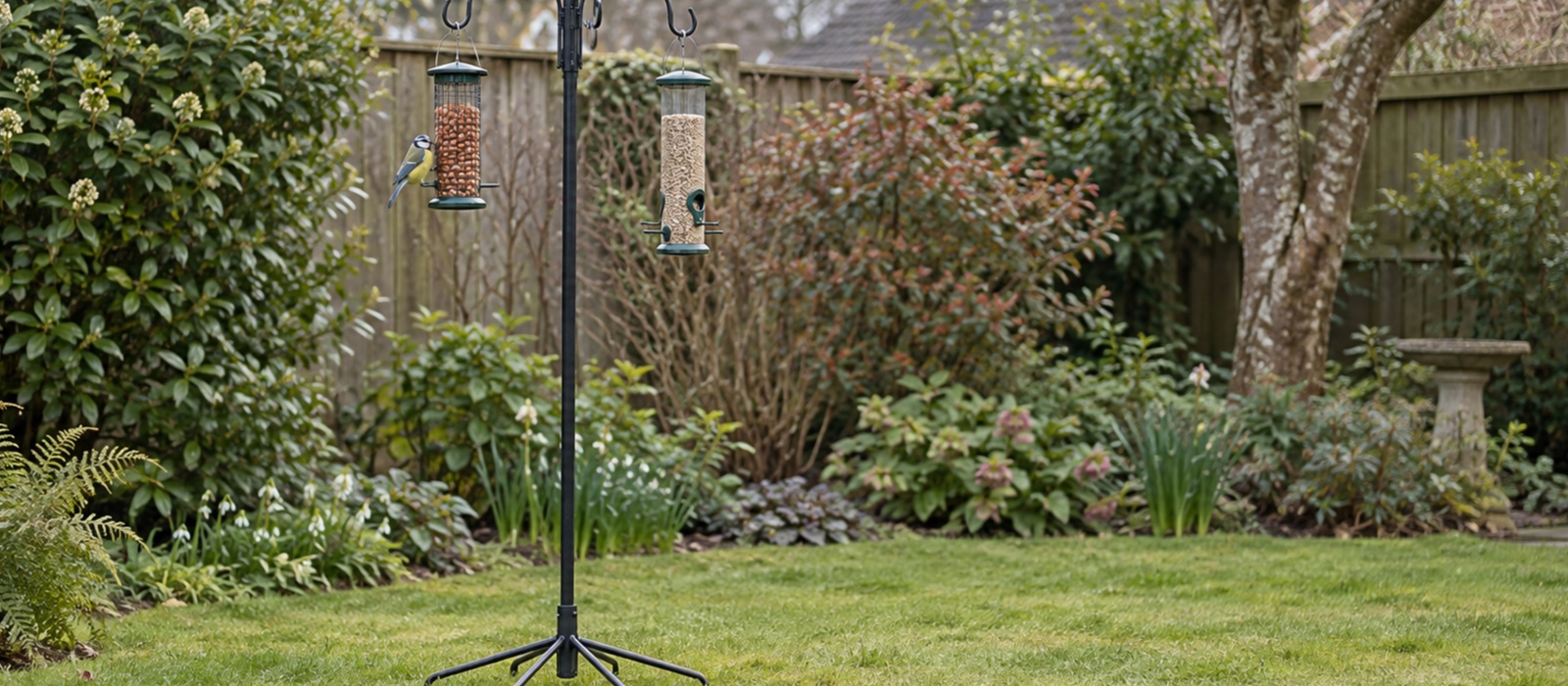
Keep the immediate area open and observe actual cat routes.
Give squirrels no simple jump from fences, branches or sheds.
Make refilling and ground cleaning easy in all weather.
The best place for a bird feeding station is not necessarily the most secluded corner. Birds need a clear view of approaching danger, a quick route to cover and a stable landing point. You need safe access for frequent checks, weekly cleaning and clearing the ground below.
Start by watching the garden rather than measuring a single standard distance. Cats, squirrels, prevailing rain, windows and foot traffic behave differently in every space.
Give birds a clear view
Keep the space immediately around the feeders open enough for birds to see a cat or person approaching. Dense shrubs touching the pole can conceal a predator and give squirrels a direct route to the hooks.
Useful cover should still be within a short flight. A small tree or hedge nearby gives birds somewhere to pause and retreat, but avoid hanging the station directly beneath its branches. Droppings and leaves can contaminate food, and branches become launch points.
Choose firm, level ground
A forked spike needs compact soil or lawn that holds each prong evenly. Avoid a soft bed that becomes waterlogged or recently filled ground that will settle. Install the pole vertically and recheck it after heavy rain, frost or high wind.
Do not hammer delicate arms or hooks. Use the intended ground bar or stabilising plate, and follow the maker's method. On a patio, use a purpose-designed weighted base rather than balancing a soil spike in a loose plant pot.
If the pole already leans or rocks, see how to stop a feeding station blowing over.
Plan for squirrels before installing
A pole baffle blocks only the route up the pole. Leave generous clearance from fences, sheds, tree trunks, branches and garden furniture so a squirrel cannot simply jump past it. Look overhead as well as sideways.
Move chairs, bins and pots that act as intermediate steps. If an open position is impossible, a guarded or weight-operated feeder may suit the garden better than an elaborate pole. Our squirrel-resistant station guide explains the options.
Reduce cat ambush opportunities
Keep the pole away from dense low cover, fence corners and narrow passages used by cats. A high feeder does not remove the risk if a cat can leap from a wall or wait where feeding birds land on the ground.
Dropped food attracts ground-feeding birds, so clear it promptly. Do not rely on bells, ultrasonic devices or a single deterrent as a substitute for a safer layout.
Consider windows and reflections
Avoid creating a fast, unobstructed flight line from the station towards a large reflective window. Watch how birds approach and depart. If they repeatedly fly towards glass, move the station or use effective external markings across the relevant pane.
Close placement to a window can reduce impact speed in some situations, while distant positioning provides room to turn, but the correct response depends on the building and flight path. Treat observed collisions as a prompt for immediate change.
Shelter food without hiding the station
Use the house, fence or planting to reduce the strongest prevailing rain, but do not tuck feeders beneath a dripping roof edge or chemically treated timber. Wind can drive water into ports from the side, so check food after storms even when a feeder has a roof.
North-facing shade can help some foods stay cooler, while very enclosed corners can remain damp. Airflow and the ability to inspect the contents matter more than choosing a compass direction by itself.
Make cleaning effortless
Leave a comfortable standing area beneath the hooks and enough clearance to lift each feeder off. If you need to lean through thorny planting or carry dirty equipment through the kitchen, weekly maintenance will become harder than it needs to be.
The ground below should be sweepable or rakeable. Move the station periodically where practical to prevent a permanent build-up of food and droppings. Read our station cleaning routine before settling on the final spot.
Use more than one smaller point
Current RSPB and BTO advice favours reducing persistent crowding and contamination. Instead of filling every hook on one large station, use one or two contained feeders and consider rotating between separate positions.
Offer small quantities, especially while birds discover the site. Current BTO guidance recommends seed and peanuts from November to April and a pause from May to October.
Quick placement checklist
- Open view around the feeding point
- Useful cover a short flight away
- No dense cat cover beside the pole
- No easy squirrel jump from above or beside it
- Firm, level ground or a purpose-designed base
- No overhanging roost, gutter overflow or chemical runoff
- Safe flight path around reflective glass
- Easy access to every feeder and the ground below
If the first position fails one of these checks, moving it a metre or two can make more difference than buying another accessory.