Practical advice
How and when to clean a nest box
A cautious UK guide to checking that a bird box is empty, removing old material lawfully and cleaning it without household chemicals.
Watch from a distance first and do not open a box that may be active.
Never keep wild eggs; follow the current licence conditions for disposal.
Let the box dry completely before closing and rehanging it.
Cleaning a nest box removes old nesting material and lets you find damage before another breeding season. It must be done cautiously. Opening a box because summer appears to be over can disturb a late brood, and abandoned eggs remain legally protected unless you are acting under the correct authority and conditions.
This guide uses the position in England. Scotland, Wales and Northern Ireland have their own licensing bodies, so check the current official rules where the box is located.
When can you clean a nest box?
The BTO advises cleaning between 1 September and 31 January. Before touching the box, watch it from a distance on several occasions. If birds are still entering, calling, carrying food or behaving defensively, leave it alone.
Under Natural England general licence GL12, authorised people may remove abandoned or unsuccessful eggs from nest boxes between 1 September and 31 January, only when the box is not currently in use and subject to the licence conditions. Read the current licence itself before relying on it.
What you will need
- Waterproof gloves reserved for wildlife cleaning
- A dedicated stiff brush or scraper
- A strong bag for old nesting material
- Hot water in a stable container
- Eye protection and a well-fitting mask if the material is dusty
- Replacement corrosion-resistant fixings, if inspection shows they are needed
Keep this equipment outdoors and separate from kitchen utensils. Wash your hands thoroughly when the work is finished, even if you wore gloves.
Step 1: confirm the box is inactive
Choose a dry day within the appropriate period. Observe first, then approach quietly. Tap the side and pause before opening so a roosting bird has an opportunity to leave. If there is any sign of current use, close or leave the box exactly as it was and retreat.
Never assume that silence means empty. Check carefully without putting fingers into material you cannot see; wasps, rodents or sharp debris may be present.
Step 2: remove and contain old material
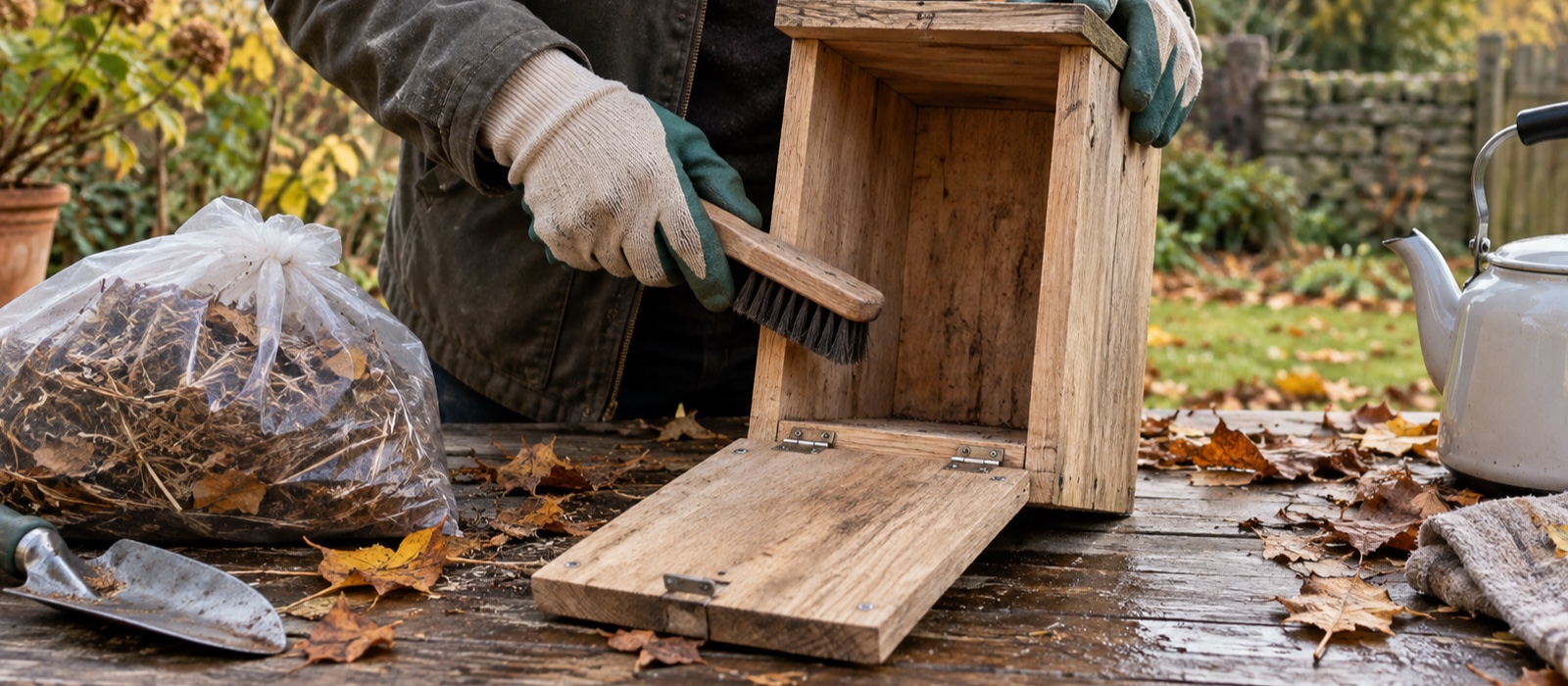
Lift the nest out with gloved hands or a dedicated tool and place it directly into a bag. Do not shake it across the lawn or compost it beside feeding areas. Old material can contain parasites, droppings and mould.
If you find eggs, stop and identify the legal position before proceeding. In England, GL12 requires eligible eggs or parts to be destroyed promptly and sets conditions on who may act and when. They are not souvenirs and must not be kept.
Step 3: brush the box clean
Remove loose debris from corners, drainage gaps and beneath the roof. Work outdoors and avoid raising dust towards your face. Inspect the floor and lower walls for damp, cracks or rot.
Do not use household bleach, washing-up liquid, scented sprays, insecticides or flea powder. Chemical residues are unnecessary and may remain in porous timber.
Step 4: rinse with hot water
Use boiling water that has been allowed to cool enough to handle without a scald risk. Rinse the interior carefully, keeping the box stable and controlling where dirty water runs. A purpose-made wildlife disinfectant should only be used when current conservation guidance specifically calls for it and exactly as directed.
Allow all surfaces to drain. Do not put bedding, sawdust or nesting material back inside; birds will bring their own.
Step 5: dry, inspect and close
Leave the box open in a dry, ventilated place until the timber is completely dry. Check the roof, hinge, floor, drainage, entrance and mounting points. Replace failed fixings and repair only with bird-safe materials.
If an entrance needs a protection plate, fit it now while the box is empty. Make sure the plate is flush, the intended hole size is preserved and no sharp edge projects inside.
Should you take the box down?
A removable box is often easier and safer to clean at ground level. Mark its exact orientation and position so it can return to the same site. Do not work from an unsafe ladder simply to avoid taking it down.
Large wall-mounted terraces and swift boxes may need professional access. Some specialist boxes are designed to remain largely undisturbed, so follow the manufacturer's maintenance guidance alongside wildlife law.
What if the box is damaged?
Minor loose fixings or a cracked roof can be repaired in the off-season. Replace a box when rot has weakened the walls, the entrance no longer holds its size or the mounting cannot be made secure.
Do not coat the interior. If the exterior needs treatment, use a suitable water-based product only on the outside and allow it to cure fully before reinstallation.
Frequently asked questions
Do nest boxes have to be cleaned every year?
Annual inspection is useful for conventional garden boxes because it removes old material and exposes damage. Only proceed when the box is confirmed empty and the work is lawful.
Can I use boiling water directly from the kettle?
Hot water is useful, but avoid carrying or pouring it at height and allow it to cool enough to prevent scalding. Take the empty box down where practical.
What should I do with the old nest?
Bag it and dispose of it with household waste rather than leaving it beside feeders or putting it in an open compost heap. Follow any local waste guidance.