Practical advice
How to protect a nest box from predators
Reduce avoidable access with good siting, sound construction and correctly sized entrance plates—without disturbing an active nest.
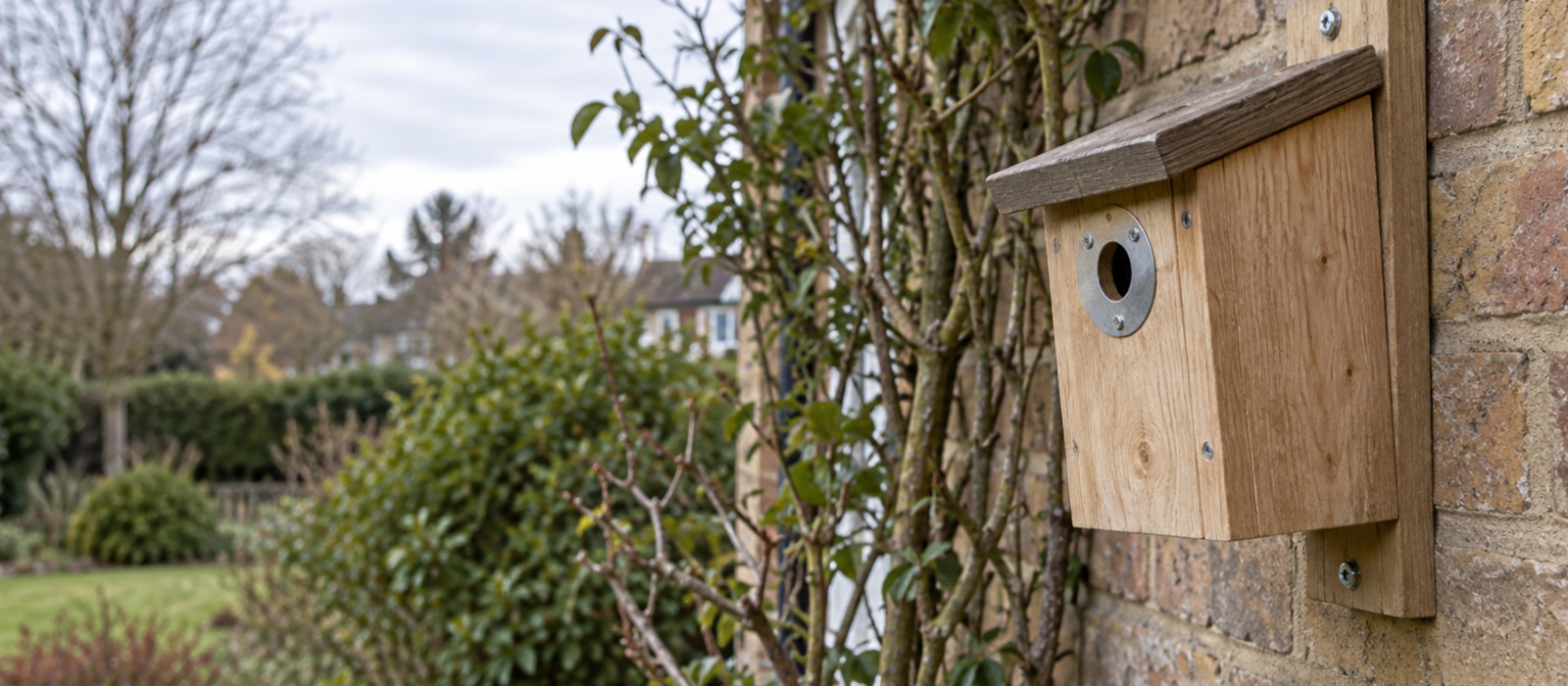
Look for routes from branches, fences, roofs and nearby structures.
[object Object]
Avoid glue, loose netting, spikes and indiscriminate deterrents.
No garden nest box can be guaranteed predator-proof. Cats, squirrels, corvids, woodpeckers and mustelids approach in different ways, while adult birds still need free access. The sensible aim is to remove obvious advantages without creating a new hazard or interfering with an active nest.
Start with the position, then the box construction, and only then consider an entrance plate. A metal ring protects one vulnerable edge; it does not defend the roof, mounting or flight path.
Assess every route to the box
Stand back and look at the site from several angles. A box may appear high from the ground but sit within an easy jump of a fence top, shed roof or strong branch. Move a new empty box before the breeding season rather than adding increasingly complicated barriers later.
Keep the approach clear for birds without creating a landing platform for predators. Do not mount the box directly above a feeder, where spilled food and concentrated activity can attract mammals and larger birds.
Use a strong, deep box
The BTO recommends timber walls at least 15mm thick. A robust roof, sound base and secure fixings make forced access more difficult and prevent gaps developing around warped panels.
The nest should sit well below the entrance. Avoid boxes that are extremely shallow, have flimsy decorative roofs or include a perch beneath the hole. Hole-nesting birds do not need the perch, but a predator may use it for leverage.
What an entrance plate can do
A correctly sized metal plate fitted flush over a wooden hole can stop squirrels or woodpeckers enlarging that edge. Choose the diameter for the intended species: commonly 25mm for blue tits, 28mm for great tits and tree sparrows, or 32mm for house sparrows.
The plate must lie flat with no projecting screws or sharp edges. It should reinforce an otherwise sound front panel, not cover rot or a badly chewed opening. Our hole-size guide explains the measurements.
What a plate cannot do
It cannot prevent a paw or beak reaching through an already oversized hole, stop access through a loose roof or compensate for a box mounted beside an easy launch point. A very thin front wall can still leave the nest within reach.
Do not stack several plates or improvise a tunnel without following a tested nest-box design. Altering the geometry can trap feet, reduce access or make it harder for fledglings to leave.
Never modify an occupied box
Fit protection when the box is empty, ideally as part of autumn or winter maintenance. Do not drill, hammer, move the box or narrow its entrance once birds are building or nesting. Wild birds, eggs and active nests are legally protected.
If damage appears during occupation, observe from a distance and seek advice from an appropriate wildlife organisation. A well-intentioned emergency repair may cause abandonment or trap a bird.
Be careful with guards and baffles
A smooth guard on a freestanding pole may reduce climbing access when it is correctly positioned, but most nest boxes are fixed to trees or walls where generic feeder baffles do not fit. Avoid wire cages that obstruct the direct flight path or create spaces where a bird could become trapped.
Never use sticky gels, grease, poison, traps, loose mesh or sharp spikes around a box. These can harm nesting birds and other wildlife and may be unlawful.
Reduce cat access without creating harm
Keep the box away from low roofs, fence junctions and horizontal branches that create a straightforward route. A stable higher position can help for a small-hole box, provided it remains appropriate for the species and safe to maintain.
Do not rely on collars made from wire, spikes or netting around a living tree. They can injure wildlife, people and the tree itself. Thoughtful relocation of an empty box is usually the safer intervention.
Maintain the protection each autumn
During the lawful cleaning period, once the box is definitely empty, check that the plate is tight and flush, the entrance remains the correct diameter and the surrounding timber is solid. Replace rusting screws and retire a box that has lost structural strength.
Our guide to cleaning a nest box explains how to time the inspection without disturbing nesting birds.
Frequently asked questions
Should every nest box have a metal plate?
No. Sound thick timber may remain perfectly serviceable without one. A plate is most useful where the entrance edge is vulnerable or previous enlargement has occurred.
Will a smaller hole stop squirrels?
A smaller correct hole may restrict access, but it must suit the intended bird. Never reduce it below the appropriate size or change it during occupation.
Can I move a box after a predator visits?
Not while the nest may still be active. Leave the site undisturbed and seek specialist advice if birds or chicks are at immediate risk. Review relocation after the breeding season.
Helpful products
Entrance plates for empty wooden boxes
Choose a plate only after confirming the correct entrance size. Fit it flush to sound timber during the off-season—never while the box is occupied or being investigated.
Simply Hardware 25mm nest-box plate
Best for: 25mm entrance reinforcement
A British-made 70mm square stainless-steel entrance plate with a 25mm hole and screw fixings.
Best 25mm retrofit plate. Drawback: it protects the entrance edge only and must never be fitted to an occupied box.
Simply Hardware 28mm nest-box plate
Best for: 28mm entrance reinforcement
A British-made 70mm square stainless-steel entrance plate with a 28mm hole and screw fixings.
Best 28mm retrofit plate. Drawback: the plate cannot compensate for thin walls, poor siting or an unsuitable box interior.
32mm stainless-steel nest-box plates (12 pack)
Best for: 32mm multi-box pack
A pack of twelve stainless-steel entrance plates with 32mm holes for suitable wooden boxes.
Best multi-box pack. Drawback: twelve is excessive for one garden and every box still needs correct species fit and spacing.