
Practical advice
How to make a simple bird bath
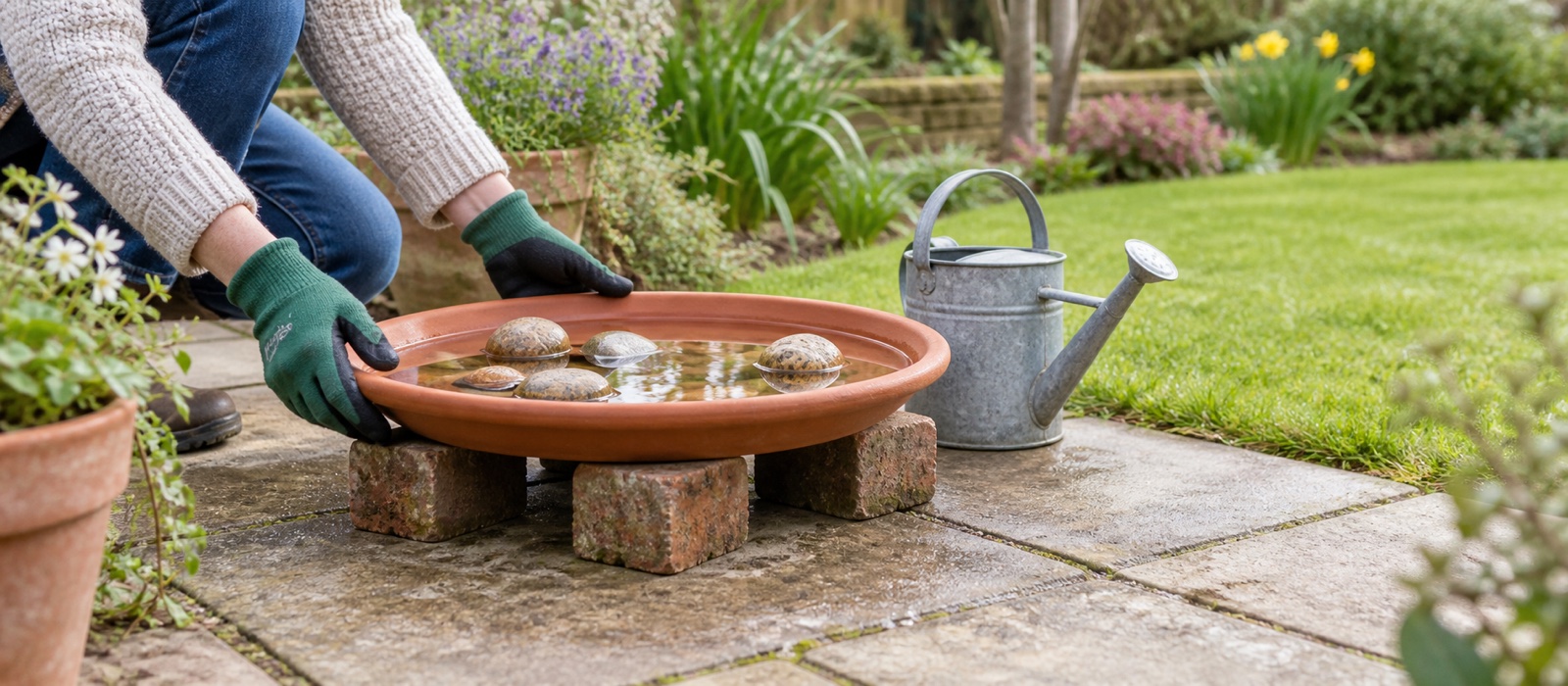
Turn a wide plant saucer into a stable, shallow bird bath with a secure footing and an easy cleaning routine.
Choose a bowl at least roughly 30cm wide if space permits.
Create a shallow edge and keep the maximum depth around 10cm.
Make every part removable so weekly cleaning stays simple.
You can make a useful bird bath from a wide plant saucer, a few bricks and clean water. The shape matters more than decoration: birds need shallow access, a surface they can grip and a stable edge from which to look around.
The RSPB's DIY bird bath activity suggests a wide, shallow, watertight container, ideally more than about 30cm across, with water no deeper than roughly 10cm. A large terracotta or glazed plant saucer is often the easiest place to begin.
What you will need
- A wide, shallow, watertight saucer or bowl
- Three or four sound bricks or a broad stable base
- One or two clean, flat stones for grip
- Plain clean water
- Waterproof gloves and a dedicated outdoor brush for cleaning
Avoid a container with cracks, sharp chips, flaking paint or an unknown chemical history. Do not use a bowl that has held pesticides, solvents or garden treatments. If it is intended for plants, wash and rinse it thoroughly before the first use.
Step 1: choose the right dish
Look for a broad shape with a gently sloping interior. A shallow plant saucer lets small birds stand at the edge and larger birds step towards the centre. More than 30cm across gives them useful space, but a smaller safe dish is still worthwhile on a balcony or compact patio.
Check the maximum water depth. Aim for around 2.5cm at an accessible edge and no more than 10cm at the deepest point. Our guide to bird bath depth explains how different species use a graduated bowl.
Unglazed terracotta offers some texture but is porous and can crack in frost. A glazed saucer may be easier to rinse but more slippery. Resin can be light enough to blow or tip. Choose a material you can lift, inspect and maintain.
Step 2: make a stable base
Set the saucer directly on level ground or raise it on a low arrangement of bricks. A short stack keeps the project simple and makes the bowl easy to remove for cleaning. Use whole, sound bricks on a firm surface; do not balance the saucer on loose rubble or a tall narrow column.
Place the bricks so the base of the bowl is supported at several points. Press gently on each part of the rim to check for rocking. Repeat the test after heavy rain or frost moves the soil.
If cats are frequent visitors, a low DIY bath may not be the right format. Consider a stable pedestal from our bird bath comparison and pay particular attention to its position.
Step 3: add secure footholds
Put one or two clean, flat stones in the bowl if they are needed to create a shallow standing point. At least part of a stone can remain above the water, giving a small bird somewhere to perch and approach gradually.
Make sure the stones cannot roll, trap a foot or expose a sharp edge. Avoid filling the whole base with small pebbles: dirt collects between them and makes the weekly clean harder. Every stone should be easy to lift out and scrub.
Step 4: add plain fresh water
Fill the saucer to a shallow level and check it with a ruler the first time. Leave space below the rim for the water displaced when a larger bird bathes. The finished surface should include a quiet shallow edge.
Tap water is normally suitable for a raised bird bath. The RSPB notes a particular nuance for chloraminated supplies used in ground-level wildlife water, so check its current water guidance if your supplier uses chloramine and the bowl is accessible to mammals as well as birds.
Do not add algae treatments, fragrance, salt or disinfectant to water that wildlife can reach.
Step 5: choose a safer position
Give birds a clear view around the bath, with a shrub or tree within a short flight for escape. Do not tuck the bowl beside dense ground cover where a cat can wait unseen. Light shade during the hottest part of the day can reduce warming and evaporation.
Keep it away from roof runoff, sprayed garden chemicals and a direct flight path into reflective glass. It should also be easy for you to reach with fresh water and a brush. Read our full guide to where to put a bird bath before choosing the final spot.
Step 6: let birds find it
Leave the bath in a suitable position rather than moving it repeatedly. Birds may investigate from a nearby branch before coming down. A shallow, clean bowl needs no food, ornament or scent to attract them.
Watch from indoors or a distance. If birds approach but do not enter, check whether the surface is slippery, the water too deep or the base unstable. If no birds approach, reassess cover, disturbance and cat routes.
Clean it every week
Replace the water every day. At least once a week, put on gloves, remove the stones, scrub away dirt, disinfect the bowl with a suitable product, rinse thoroughly and allow it to air-dry before refilling.
The BTO hygiene guide recommends dedicated outdoor brushes and cleaning equipment. Our step-by-step bird bath cleaning guide covers the process in detail.
If you see sick or dead birds, empty the bath and follow current official disease advice before offering water again.
Adapt it for winter
Porous terracotta can be vulnerable when absorbed water freezes. Check the saucer for frost resistance and bring it into shelter if necessary. A removable resin or metal dish may be easier to swap during a cold spell.
Never use salt, glycerine or antifreeze, and do not pour boiling water onto a frozen bowl. Our guide to stopping a bird bath freezing explains safer ways to replace ice with fresh water.
Simple upgrades that remain practical
You can place a second shallow dish at a different height, add a broader level paving base or use a separate solar pump if the bowl is large enough. Each extra piece creates more to inspect and clean, so add it only when it solves a real problem.
A gentle fountain can make water more noticeable, but it does not clean the bath. If you want one, compare the pump, spray and bowl requirements in our solar fountain guide.
The best homemade bath is not the most elaborate. It is the one that stays stable, shallow and clean throughout the year.